How Rooftop Solar Can Reduce Electricity Costs in Bangladesh
Electricity is an essential operating cost for homes, offices, commercial buildings, factories, educational institutions, hospitals, and other organizations in Bangladesh. As electricity demand grows, many property owners and businesses are looking for practical ways to manage long-term energy expenses.
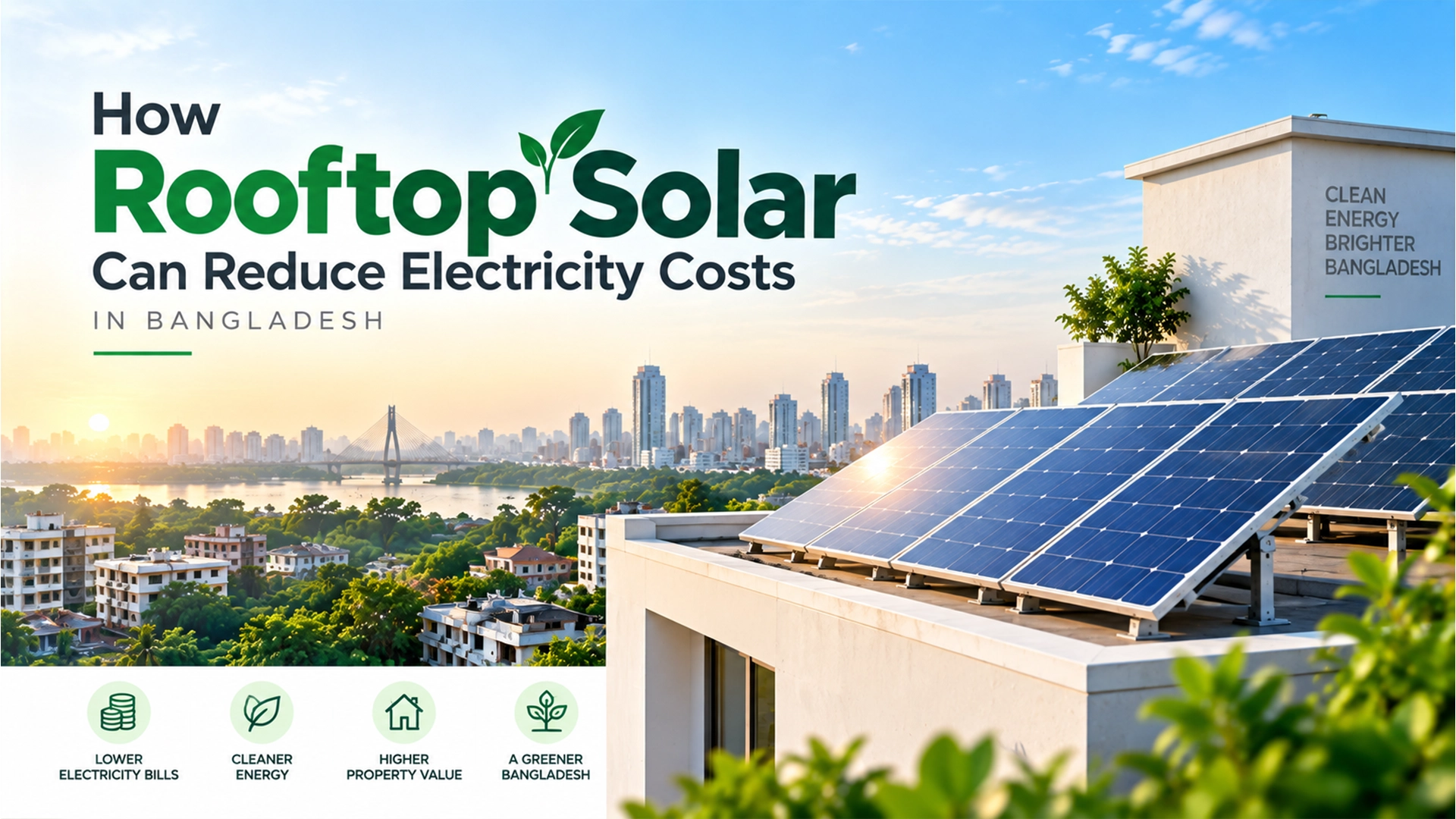
One increasingly relevant option is rooftop solar in Bangladesh. Instead of leaving an available rooftop unused, a properly designed solar photovoltaic (PV) system can convert sunlight into electricity that can be consumed within the building. In suitable installations, this can reduce the amount of electricity purchased from the grid and support a more sustainable energy strategy.
But how does rooftop solar actually reduce electricity costs, and what should you consider before investing in a system?
What Is a Rooftop Solar System?
A rooftop solar system uses photovoltaic panels installed on the roof of a residential, commercial, or industrial building to generate electricity from sunlight.
A typical system may include:
Solar Panels → Inverter → Distribution System → Electrical Loads
Depending on the design, additional components such as batteries, energy-storage systems, monitoring equipment, protection devices, and grid-interconnection equipment may also be included.
During daylight hours, solar panels generate DC electricity. A solar inverter converts that electricity into AC power suitable for compatible electrical loads.
How Does Rooftop Solar Reduce Electricity Bills?
The basic principle is straightforward: the more of your electricity demand that can be supplied by your own solar generation, the less electricity you may need to purchase from the grid.
Imagine an office building that operates mainly between 9 AM and 6 PM. Computers, lighting, fans, air-conditioning, networking equipment, elevators, and other systems consume electricity throughout the day.
Solar panels also produce electricity during daylight hours. This creates an opportunity to use solar generation while the building is actively consuming electricity.
For many commercial users, this alignment between daytime energy consumption and daytime solar generation can make rooftop solar particularly relevant.
1. Generate Electricity From an Existing Rooftop
One major advantage of rooftop solar is that it utilizes space that may otherwise provide little direct economic value.
Instead of requiring separate land, solar panels can potentially be installed on suitable rooftops of:
- Residential buildings
- Corporate offices
- Shopping facilities
- Schools and universities
- Hospitals and clinics
- Factories
- Warehouses
- Hotels and restaurants
The feasibility depends on roof condition, usable area, structural capacity, shading, orientation, and other technical considerations.
2. Reduce Dependence on Grid Electricity During Daytime
Suppose a commercial facility requires 100 units of electricity during a certain period and its solar system supplies 30 units during that same period.
In a simplified example, only the remaining requirement would need to come from other available sources.
The actual financial result depends on many factors, including the user's electricity tariff, solar generation, consumption profile, system losses, weather conditions, and system configuration.
This is why solar system sizing should be based on actual electricity-consumption data, rather than simply installing as many panels as possible.
3. Rooftop Solar Can Be Particularly Useful for Businesses
Businesses with substantial daytime electricity consumption may have an attractive load profile for rooftop solar.
Factories, offices, warehouses, hospitals, educational institutions, and commercial buildings often operate heavily during daylight hours—the same period when solar PV systems generate electricity.
For industrial users, a rooftop solar installation may therefore become part of a broader energy-cost-management strategy.
However, industrial systems require professional engineering. Load patterns, roof structure, transformer capacity, electrical protection, system design, safety requirements, and grid integration should all be evaluated.
4. Net Metering Can Change the Economics
Some grid-connected rooftop solar installations can potentially participate in Bangladesh's applicable net metering framework, subject to current regulations, technical requirements, eligibility, and utility approval.
In a net-metering arrangement, eligible surplus solar electricity exported to the grid can be accounted for according to the applicable rules.
This can be useful because solar production and electricity consumption do not always occur at exactly the same time.
However, net-metering rules and requirements can change. Anyone planning a grid-connected system should verify the latest requirements from the relevant Bangladesh authorities and electricity distribution utility before making an investment decision.
5. Solar Panels Can Provide Long-Term Energy Value
A rooftop solar project typically requires a significant upfront investment. Therefore, it should be evaluated over its expected operating life rather than only by its purchase price.
Important financial considerations include:
| Factor | Impact |
|---|---|
| System Size | Determines potential generation capacity |
| Electricity Tariff | Influences potential financial savings |
| Daytime Consumption | Affects direct solar utilization |
| Roof Area | Limits possible panel capacity |
| Shading | Can reduce solar generation |
| Equipment Quality | Influences efficiency and reliability |
| Installation Quality | Affects safety and performance |
| Maintenance | Supports long-term operation |
A financial assessment can estimate expected annual generation, electricity savings, operating costs, and approximate payback period.
Savings should not be guaranteed without evaluating the specific site and consumption data.
6. Do You Need Batteries With Rooftop Solar?
Not necessarily.
A grid-connected rooftop solar system may operate without battery storage, depending on the system design and user's objectives.
Adding batteries can provide energy-storage or backup capabilities, but it also increases initial cost and introduces additional considerations such as battery capacity, cycle life, charging strategy, replacement cost, and operating environment.
For users whose primary objective is reducing daytime electricity purchases, a properly designed grid-connected system without large battery storage may sometimes be appropriate.
For users who also require backup power, a hybrid solar and battery solution may be considered.
Rooftop Solar for Homes
Residential users can also benefit from rooftop solar, particularly when the household has suitable roof space and meaningful daytime electricity consumption.
A home solar solution can potentially support selected loads such as lighting, fans, routers, televisions, and other suitable appliances depending on system capacity.
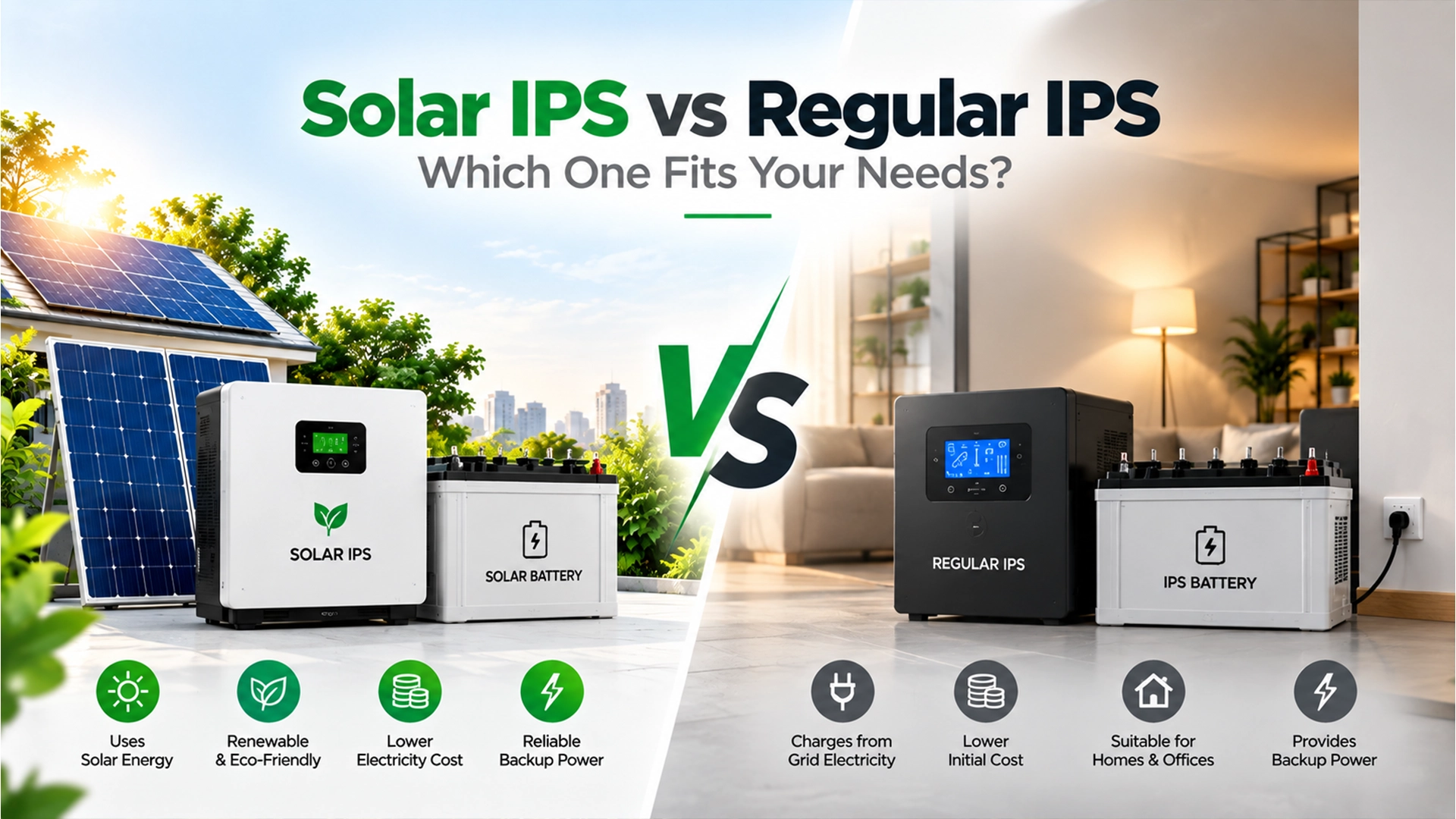
Households requiring backup during power interruptions may consider solar combined with an inverter and battery storage.
The correct solution depends on the home's actual load and expected backup duration.
Rooftop Solar for Commercial and Industrial Buildings
For businesses, rooftop solar can operate on a much larger scale.
A commercial or industrial solar project may involve dozens, hundreds, or significantly more solar panels depending on available roof area and required capacity.
Before installation, businesses should ideally conduct:
Electricity Bill Analysis → Load Assessment → Site Survey → Roof Assessment → Solar System Design → Financial Analysis → Installation & Commissioning
This approach helps ensure that the proposed system is technically suitable and financially justified.
How to Get the Most From a Rooftop Solar System
Installing quality solar panels alone is not enough. System performance depends on the complete design.
Panel placement should minimize shading. The inverter should be properly matched to the solar array. Electrical cables and protection devices should be correctly selected. Installation should comply with applicable safety requirements.
Regular inspection and cleaning may also be required depending on environmental conditions.
A monitoring system can help users track solar generation and identify unusual performance changes.
Is Rooftop Solar Worth Considering in Bangladesh?
For a suitable property, rooftop solar can be worth evaluating—particularly where there is good solar exposure, sufficient usable roof area, and substantial daytime electricity consumption.
The financial outcome varies from project to project. A factory with heavy daytime demand will have a very different energy profile from a home that is mostly empty during the day.
Therefore, rather than asking only “How much does a solar system cost?”, a better question is:
“What solar system size makes sense for my actual electricity consumption?”
That question leads to a more practical and financially informed solution.
Conclusion
Rooftop solar in Bangladesh provides an opportunity to transform unused roof space into an electricity-generating asset.
By generating electricity during daylight hours, a properly designed solar system can reduce grid electricity consumption and potentially lower long-term energy costs. For eligible grid-connected installations, applicable net-metering arrangements may provide additional value.
The key is proper planning. Electricity consumption, roof conditions, solar exposure, system capacity, equipment quality, installation standards, and financial objectives should all be evaluated before installation.
For homes, businesses, and industries exploring cleaner energy, rooftop solar can form an important part of a more efficient and sustainable power strategy.
Ecovilo — Powering a Cleaner, Greener & Brighter Bangladesh.